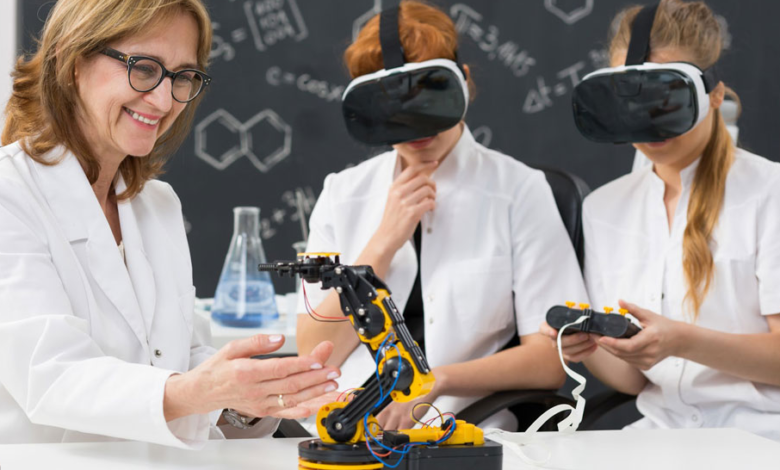
Virtual Reality is reshaping the landscape of education and training through immersive experiences that engage learners like never before. By simulating real-world scenarios, VR enhances understanding and cultivates essential skills in a risk-free environment. This technology is not limited to a single discipline; its applications span various fields, promising to redefine traditional teaching methods. As innovations continue to emerge, the implications for future learning environments are profound and thought-provoking.
The Benefits of Immersive Learning Environments
As educators increasingly integrate technology into curricula, immersive learning environments have emerged as a transformative approach to education.
These settings foster interactive experiences that captivate students, enhancing learner engagement. By enabling learners to explore concepts in dynamic, simulated contexts, educators can stimulate curiosity and promote deeper understanding.
This innovative approach empowers individuals to connect knowledge with real-world applications, ultimately enriching their educational journey.
See also: How Technology Is Used in Sports Performance Analysis
Enhancing Skill Development Through Simulation
Simulation technology revolutionizes skill development by providing learners with realistic, hands-on experiences that traditional methods often lack.
Through virtual apprenticeships, individuals engage in experiential learning, honing their skills in safe environments. This innovative approach not only fosters creativity but also enhances confidence, allowing learners to experiment without fear of real-world consequences.
Ultimately, simulation technology paves the way for more effective and liberated skill acquisition.
Applications of VR in Various Educational Fields
The integration of virtual reality (VR) has transcended traditional learning paradigms, finding applications across diverse educational fields.
In language learning, immersive environments foster engagement and conversational practice, enhancing fluency.
Moreover, VR facilitates historical reenactments, allowing students to experience pivotal moments in time, thus deepening their understanding of cultural contexts.
This innovative approach cultivates an interactive and experiential learning atmosphere, promoting autonomy and exploration.
Future Trends in VR for Education and Training
While many educational institutions have only begun to scratch the surface of virtual reality’s potential, emerging trends suggest a transformative future for VR in both education and training.
Personalized learning experiences will empower learners to engage at their own pace, while remote collaboration tools will facilitate seamless interactions among students and educators worldwide, fostering innovation and a deeper understanding of complex subjects.
Conclusion
In conclusion, as virtual reality continues to weave itself into the fabric of education and training, it stands as a bridge between imagination and reality, inviting learners to step into a world where knowledge isn’t just absorbed but experienced. This transformative technology not only enhances engagement but also cultivates essential skills in a risk-free environment. By embracing VR, educators are crafting a vibrant tapestry of learning that prepares students for the complexities of the modern world, ensuring a future rich with possibilities.